
Guides
Upstairs neighbour noise: how to document it
Footsteps, stamping, furniture being moved – how to describe noise from the flat above factually, and what a measurement can and cannot show.
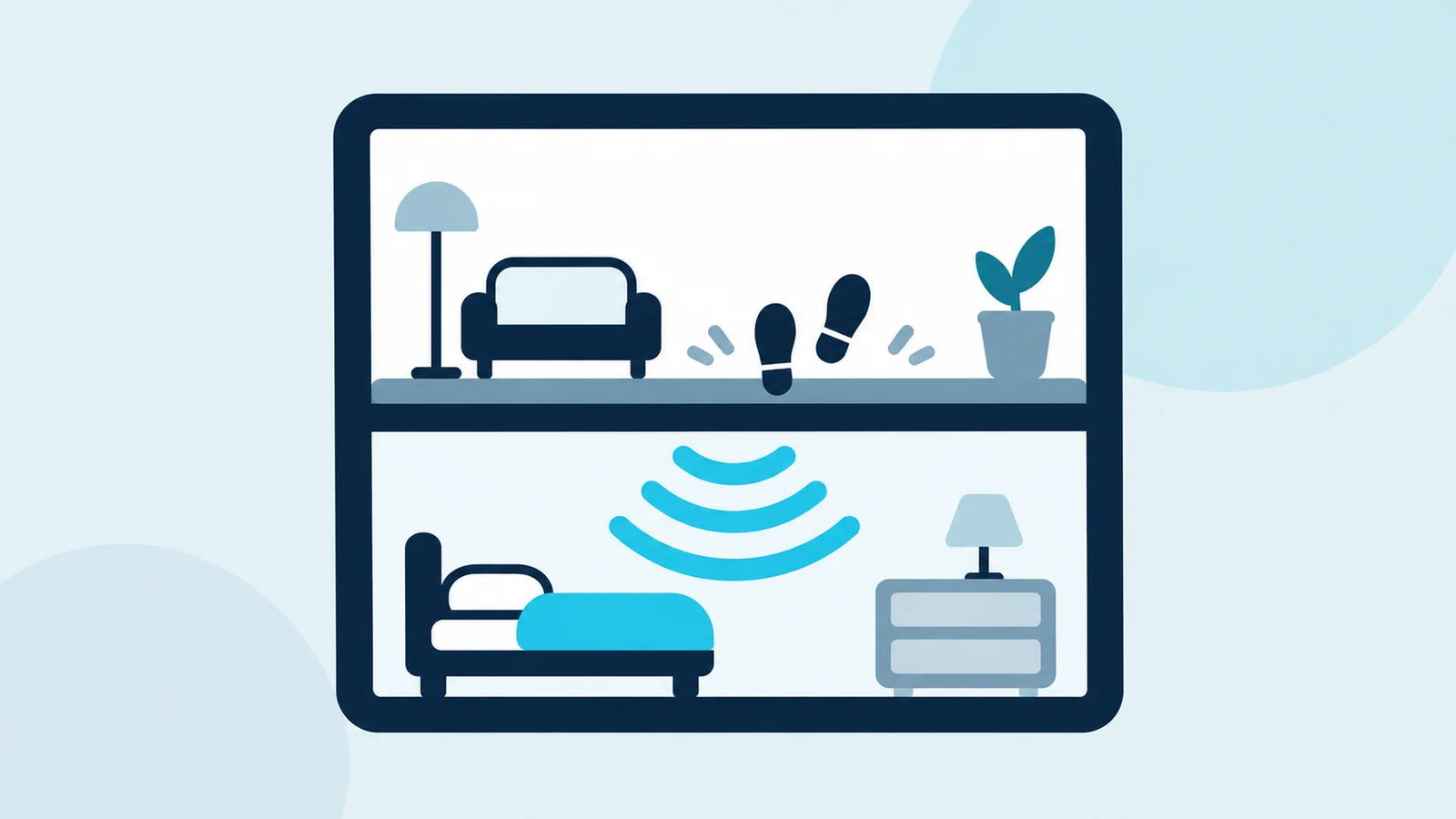
Upstairs neighbour noise – footsteps, stamping, jumping or furniture being moved in the flat above – is best captured with a diary that records the time, duration, type and impact. Because this kind of impact noise sounds dull and low, a dB(A) value on its own says little. The description matters more: when it happens, what it sounds like and how often.
What impact noise sounds like and what to note
| Sound | How to describe it | What to look out for |
|---|---|---|
| Walking in hard shoes | “clear footsteps, hard, from above” | Time, whether continuous or occasional |
| Stamping, jumping | “dull thuds, rhythmic, ceiling vibrates slightly” | Duration, frequency, time of day |
| Moving furniture | “scraping above the living room” | Time, how often per evening |
| Objects falling | “single loud thud” | Exact time |
| Children running | “quick footsteps back and forth” | Time of day, duration |
Describe what you hear and feel, for example whether lamps sway or glasses rattle. Write “probably the flat above” if you are not sure of the source.
An example diary (fictitious)
| Date | Time | What could be heard | Room | Impact |
|---|---|---|---|---|
| Tue 11 Mar | 06:05 – 06:20 | hard footsteps back and forth | Bedroom | woke up before the alarm |
| Tue 11 Mar | 22:40 – 22:55 | furniture being moved, several times | Living room | conversation interrupted |
| Wed 12 Mar | 23:10 – 23:30 | dull thuds, rhythmic | Bedroom | took longer to fall asleep |
| Thu 13 Mar | 06:00 – 06:15 | hard footsteps | Bedroom | woke up before the alarm |
After just a few days a pattern emerges: footsteps early in the morning, single loud noises in the evening. That is exactly what makes a conversation specific.
What a measurement can show – and what it can’t
A smartphone records when it got louder and for how long. With impact noise, that is the real benefit, because the times are often the strongest argument.
You should know the limits:
- Low sounds are weighted less. dB(A) gives less weight to low frequencies. A dull thud can be disturbing even though the value is low.
- The microphone does not measure vibrations. Note them in the description.
- Short thuds are over quickly. A logging limit just above the background level helps to capture them.
- Smartphone readings are guide values. More on this in How accurate is a phone decibel meter?
Noise Diary has the category Footsteps / impact noise for cases like this. Each noise event gets its time, duration and level automatically; you choose what could be heard by selecting a category and add a short description.
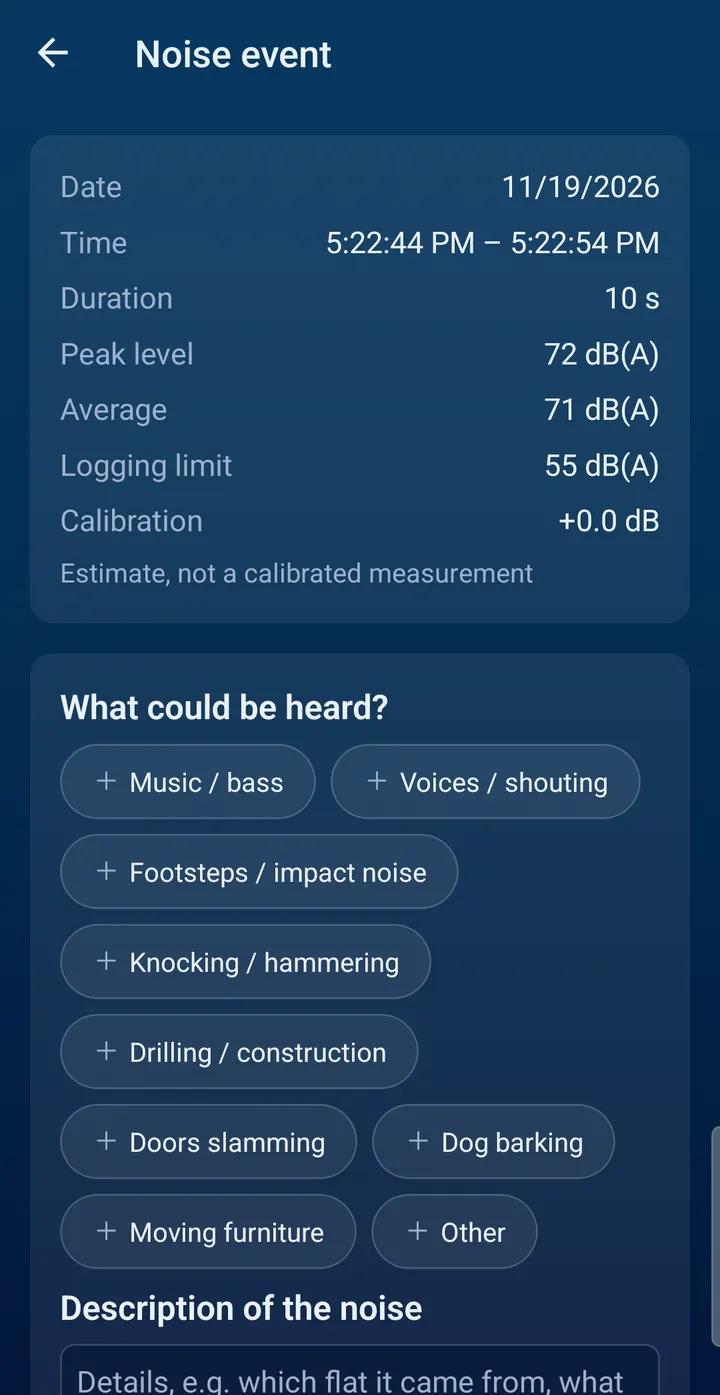
Tip: For the measurement, do not place your phone directly against the wall or on the floor, but where you feel disturbed, for example on your bedside table.
Talking to your upstairs neighbour
People who live above you often do not realise how much can be heard below. It helps to:
- Give one or two specific examples, such as “Tuesday and Thursday at around 6 am”.
- Describe, don’t blame: “I can hear the footsteps very clearly in my bedroom.”
- Suggest solutions: a rug or runner in the hallway, felt pads under chairs, slippers.
- Follow up later: Note whether anything has changed.
If the conversation does not help, you can take your diary to your landlord or the property management. How to describe noise factually and who you can turn to is explained in Noisy neighbours? How to document the noise.
Noise Diary is not in the app stores yet – sign up here to be notified. To get started, the free noise diary template is enough.
Frequently asked questions
Can a phone measure impact noise?
It can record the level in the room as a guide value and capture when and for how long it was noisy. Impact noise is often low-frequency and dull; sounds like this can be disturbing even though the dB(A) value is fairly low.
Do I have to put up with normal walking in the flat above?
How much everyday living noise has to be tolerated depends on the individual case, the building and the applicable law. A diary helps you describe the situation factually if you seek advice.
How can I tell whether it is impact noise?
Typical signs are dull, rhythmic sounds from above that are linked to movement, such as footsteps, jumping or furniture being moved. Note what you hear and mark the source as an assumption.
What can the neighbour upstairs do?
Common suggestions are rugs or runners, felt pads under chairs and slippers instead of hard shoes. Ideas like these are easy to bring up in a conversation.
Note: smartphone readings are indicative and do not replace a professional assessment.
This guide is general information, not legal advice.
Noise Diary is coming to Android first, iOS later. Sign up and we will email you as soon as the app is in the store for your platform. The templates and guides stay free to use without signing up.
Notify me
Get an email as soon as Noise Diary is available on Google Play or the App Store. This is not a user account – you use the app without signing in.
Related articles

Noisy neighbours? How to document the noise
Music, footsteps, knocking or barking – how to record neighbour noise factually, prepare for a conversation and know who you can turn to.

How to keep a noise diary: guide and example
What belongs in a noise diary, how to record recurring disturbances and how long to keep it going, with a filled-in example week.

How accurate is a phone decibel meter?
Smartphones show sound levels as a guide value. What dB(A), peak level and average mean, where the limits lie and how to take comparable measurements.